

Our students are coming up to their Final Clinical Exam, the FCE, after six years of study. Every one of them has to sit it.
It is a practical exam. The student takes a patient they have never met, while external examiners they also do not know sit and watch. There is no written paper to hide behind and no way to revise a script for it, which is rather the point.
What happens in the exam room
The student runs a consultation from the beginning. They take a case history from the patient, then carry out a clinical examination to help them settle on the differential diagnoses, meaning the range of conditions it could reasonably be, before committing to a working diagnosis of what they think is most likely.
The patient then leaves, and the student is given time on their own to reflect and write a prescription.
That is when the questioning starts. The examiners can ask about any aspect of the consultation, the diagnosis or the prescription the student has just written. After that come questions on any part of clinical diagnosis or treatment at all, with no warning about what is coming.
What the examiners are actually marking
Less of it is about herbs than students expect.
They are marked on their rapport with the patient. On whether their questioning is effective and sensitive. On whether they put the patient at ease. On whether they avoid leading questions, which is harder than it sounds when you already have a suspicion about what is in front of you and forty minutes to confirm it.
The clinical reasoning matters, of course, and so does the prescription. But a student who knows their Materia Medica and cannot sit properly with a nervous person is not ready to practise, and the exam is designed to show that up.
Why we examine this way
We could set a written paper. It would be easier to mark and considerably easier to pass.
We do not, because it would tell us almost nothing about whether someone is safe to put in front of a patient. You cannot learn to sit with someone who is frightened by reading about it. A student who has written prescriptions that did not work, and been asked why by a tutor standing next to them, is a different practitioner from one who has only ever answered questions on paper.
This is also why the course runs to six years rather than three. The clinical component is the reason for the length, not padding around it.
How students are prepared for it
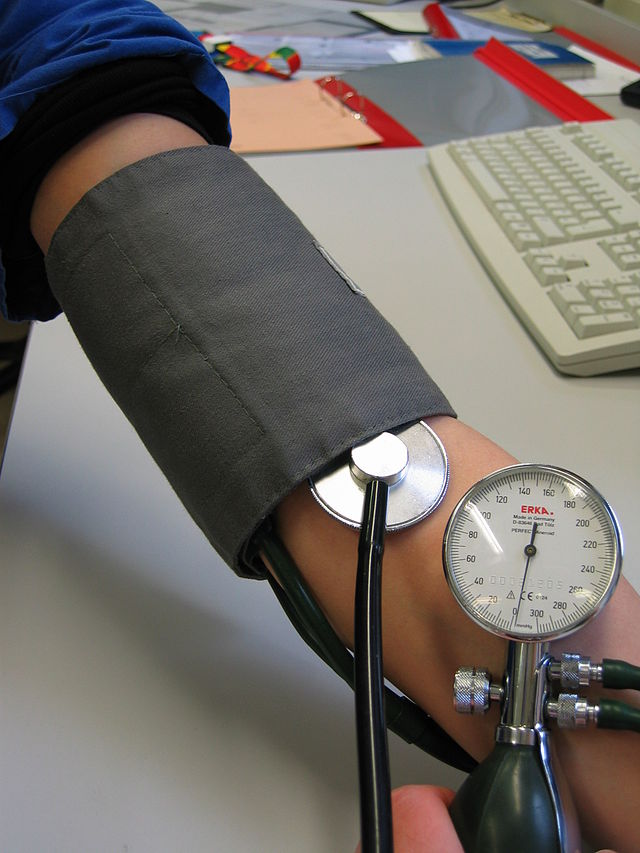
By the time a student reaches the FCE they have completed more than 500 hours in clinic with real patients, spread across four years of the course. That is the preparation. It is not a revision exercise bolted on at the end.
Much of it happens at our student clinic in Bridgwater, at 28 Angel Crescent, which runs every Monday from 10:00 to 16:00 with 3-4 patient slots a day. Students see those patients under supervision, take the histories, and dispense the prescriptions they have written.
The examiners know perfectly well that students will be nervous, and they allow for it. Nobody is trying to catch anyone out.
Students who have done enough practise and revised their Materia Medica properly have been known to come out saying they enjoyed it.
What passing the FCE leads to
Passing the FCE is what stands between six years of study and the Advanced Diploma in Herbal Medicine.
Graduates are then eligible to apply to join the Association of Master Herbalists. The School is currently in the scrutiny of submission documents phase with the EHTPA.
If you are considering the course
The FCE is the honest answer to a question we are asked often, which is why the course takes six years when shorter ones exist. This is what the sixth year builds towards, and we do not think that it is something that can be compressed.
If you would like to talk about whether the course would suit you, we would be glad to hear from you. You can read more about the six-year Advanced Diploma, or apply for the course when you are ready.